
EVERYONE KNOWS THE LOCATION.
EXCEPT THE SPY.
Play Who Is the Spy online free: everyone shares a secret location… except one spy who knows nothing. Non-spies answer questions carefully to prove they belong. The spy listens, blends in and tries to guess the location before they're exposed.
Spy is a game in the Pocket Party app


THE SIMULATION
You know the secret location. One player doesn't. Your job is to answer questions subtly enough to avoid revealing it — but clear enough to prove you're not the spy.
HOW TO PLAY
THE DEAL
THE QUESTIONS
THE ACCUSATION
THE SPY'S GUESS
Way #1: At any time, the Spy can stop the game and guess the location. Right guess? Spy wins. Wrong guess? Non-spies win.
Way #2 (The Golden Guess): If the group correctly votes out the Spy, that player gets one final chance to steal the win by guessing the location. If they nail it, the Spy still wins. This is why everyone's answers need to sound informed but not too obvious.
Full Game Rules
Setup
- Gather a group of participants, ideally between 3 and 10 players. The game works best with a diverse mix of personalities.
- Choose a comfortable space to play, such as a living room or a backyard, where everyone can sit together in a circle.
Gameplay
- Everyone gets a secret location — except one person, who just gets the word 'Spy'. Make sure no one sees your word.
- Questioning Round: The chosen player asks another participant a question about the location. It should be indirect enough to keep the spy guessing, yet clear enough for non-spies to demonstrate their knowledge. Example: "What do people usually do here?"
The respondent gives a brief, single-sentence answer, hinting at their knowledge of the location without being overly revealing. - Turns and Accusations: Players take turns to ask and answer questions.
Any player can accuse another of being the spy at any point. A majority vote is needed to confirm the accusation. If the majority suspects the right player as the spy, the non-spies win. If not, the game continues. - Spy's Guess: At any point, the spy can interrupt to guess the location. If they guess correctly, the spy wins. If the guess is incorrect, the non-spies win.
- Game End: The game ends when: The spy is caught or correctly guesses the location.
If the spy fails to guess the location and remains undetected, the non-spies win.
EXPLORE THE LOCATIONS
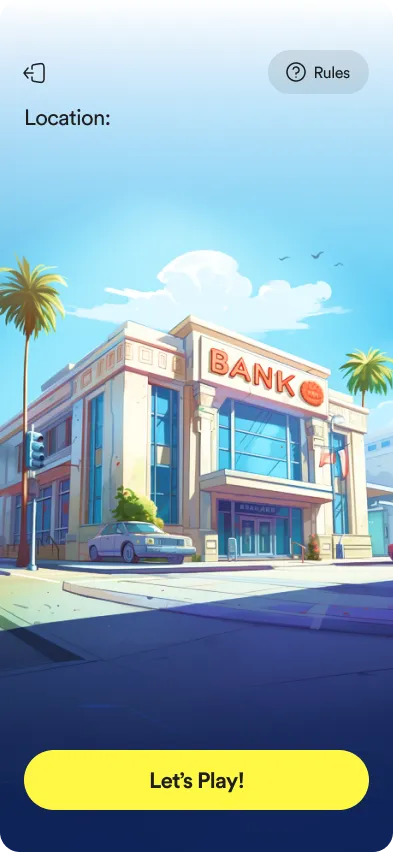
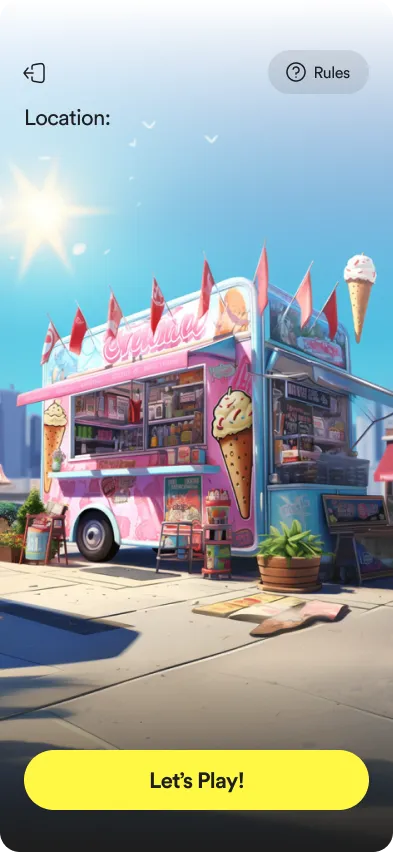
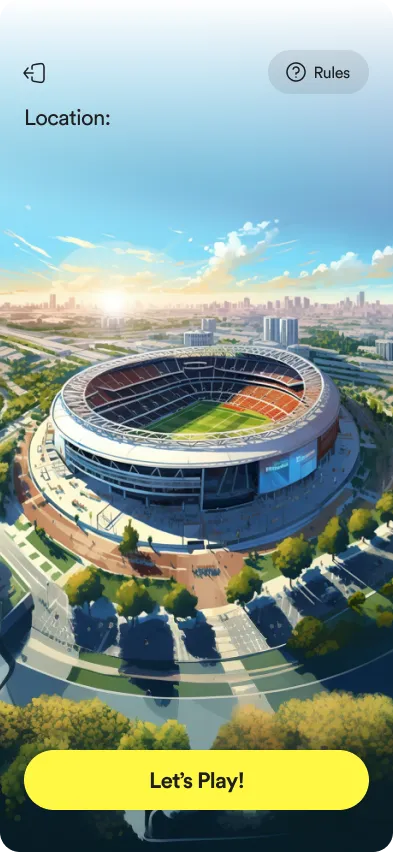
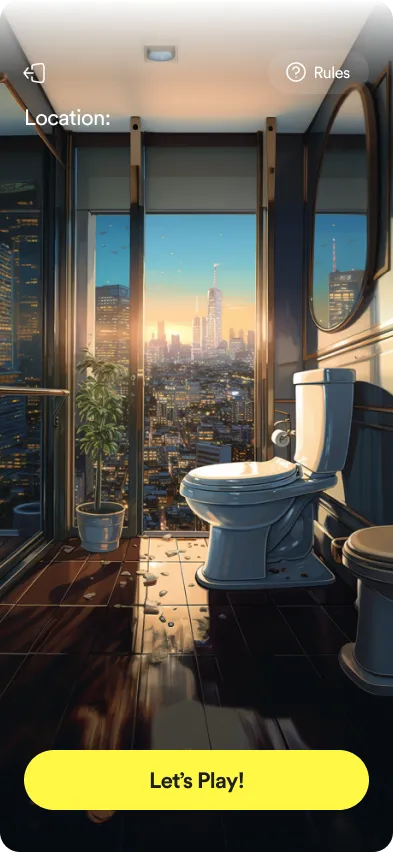
Hundreds of beautifully illustrated locations to discover. From banks to bathrooms, ice cream shops to sports stadiums — every location tells a story.
Location:
Bank
Location:
Ice Cream Shop
Location:
Sports Stadium
Location:
Toilet
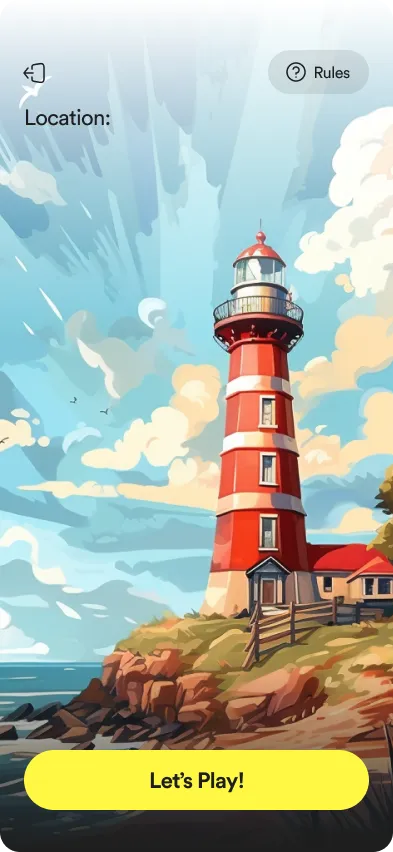
Location:
Lighthouse
200+ More Cards
Not just locations — Spy also includes objects and other secret categories. New content is added regularly to keep the game fresh and unpredictable.
STRATEGY GUIDE
Master the game with these expert tips for Spies and Non-Spies
For Non-Spies
Your goal: Prove you know the location without revealing it to the Spy
- 1.
Ask smart, specific questions
Questions like "What time of day is this place busiest?" reveal who knows the location without saying it.
- 2.
Give informed but vague answers
Say enough to prove you belong, but keep it generic. "Comfortable clothes" works better than "swimsuit" at a beach.
- 3.
Watch for hesitation
The Spy will pause before answering or give overly generic responses like "it depends."
- 4.
Don't make it too easy
Remember: if the Spy guesses the location, you lose. Balance proof with protection.
- 5.
Call the vote at the right time
Don't wait too long — the more questions, the more clues the Spy collects.
For the Spy
Your goal: Blend in, gather clues, and guess the location before you're caught
- 1.
Listen before you speak
Every answer is a clue. Pay close attention to keywords and context from other players.
- 2.
Mirror the tone and style
If others give short answers, keep yours brief. If they elaborate, add detail. Blend in naturally.
- 3.
Use safe, universal answers
"It depends on the situation" or "Usually casual" work almost anywhere.
- 4.
Ask broad questions
Questions like "How often do people visit?" gather clues without exposing you.
- 5.
Guess when you're confident
Don't wait until you're exposed. If you've narrowed it down to 2-3 options, take the shot.
- 6.
Stay calm under pressure
If accused, don't panic. Even if caught, you still get one final guess to win.
Pro Tip: The best games happen when non-spies balance trust and suspicion.
Too cautious? The Spy wins by guessing. Too obvious? The Spy wins by blending in.
GREAT QUESTIONS TO ASK
The right question can expose the Spy or protect the location. Use these examples to master interrogation.
"What do people usually wear here?"
Tests knowledge without naming specifics. Safe answers work anywhere, but tone reveals confidence.
"What time of day is this place busiest?"
Requires location knowledge. Generic answers like 'varies' might expose the Spy.
"Who typically works at this location?"
Reveals familiarity. The Spy must bluff job roles without context.
"What's the usual temperature here?"
Indoor vs outdoor clue. Forces the Spy to guess the environment.
"How long do people usually stay?"
Tests understanding of the location's purpose and typical visit duration.
"What sounds would you hear here?"
Sensory details are hard to fake. The Spy must imagine without knowing.
"Do children often visit this place?"
Age demographics vary by location. A simple yes/no can reveal a lot.
"What would you bring with you?"
Tests practical knowledge. 'Nothing special' works anywhere but sounds evasive.
"Is this place indoors or outdoors?"
Direct but fair. Even Spies can sometimes eliminate 50% of possibilities.
Remember: Questions should never directly reveal the location.
The goal is to catch inconsistent answers, not to make it too easy for the Spy to guess.
THE GOLDEN GUESS: CAUGHT? YOU CAN STILL WIN.
If the group votes and catches you as the spy, the game isn't over yet. The Golden Guess gives you one final chance to steal victory from the jaws of defeat.
Make your best guess at the secret location. Get it right, and you win the entire round. Get it wrong, and the non-spies celebrate. This mechanic keeps every game exciting until the very last second.
WATCH SPY IN ACTION
Swipe to see more viral moments from TikTok & YouTube Shorts
Why Spy is the best Imposter Game
All Bluff. No Trivia.
Unlike complex board games, Spy is fast to learn and doesn't require trivia or pop-culture knowledge. You just need to ask clever questions and read people.
- ✓Simple rules — learn in 1 minute
- ✓Hundreds of fun locations
- ✓Perfect for 3–10 players
- ✓Works at home, in class, or at the office
- ✓Play in person or online with any device
- ✗Complicated rulebooks and setups
- ✗Rely on trivia or niche knowledge
- ✗Slow, awkward first rounds
- ✗Hard to teach to new players
- ✗Not built for phones or online play
FREQUENTLY ASKED QUESTIONS
Everything you need to know about playing Spy
Spy works with 3-10 players. The sweet spot is 5-8 players because there is enough suspicion, but rounds still move quickly.
Yes. Spy is a streamlined Spyfall-style social deduction game: everyone knows the secret location except the spy, and players ask questions to work out who is bluffing.
Yes. Pocket Party deals the roles and location digitally, so you do not need printed cards, a custom deck, or a moderator.
The spy should ask broad questions, copy the level of detail other players use, and wait for enough clues before guessing the location.
Spy is strong for medium and larger groups up to about 10 players. With bigger groups, keep answers short and call votes quickly so the spy does not collect too many clues.
Kids can play Spy if they are comfortable bluffing, reading social clues, and keeping a secret role. For younger groups, use familiar locations and shorter rounds.
About Spy
Spy is a social deduction game where everyone shares a secret location — a beach, a cinema, a classroom — except one player who only sees the word "Spy". Players take turns asking each other sneaky questions about the location, trying to prove they belong without giving it away.
The spy listens carefully, fakes confidence, and tries to guess the location before the group vote. If the spy guesses correctly, they steal the win. If the group catches the spy, the non-spies celebrate.
It's fast to learn, endlessly replayable, and perfect for game nights, house parties, classrooms, and coworking spaces.